 Español
Requirements
TSA Approval for Foreign Flight Students: How the Flight Training Security Program Works, Step by Step
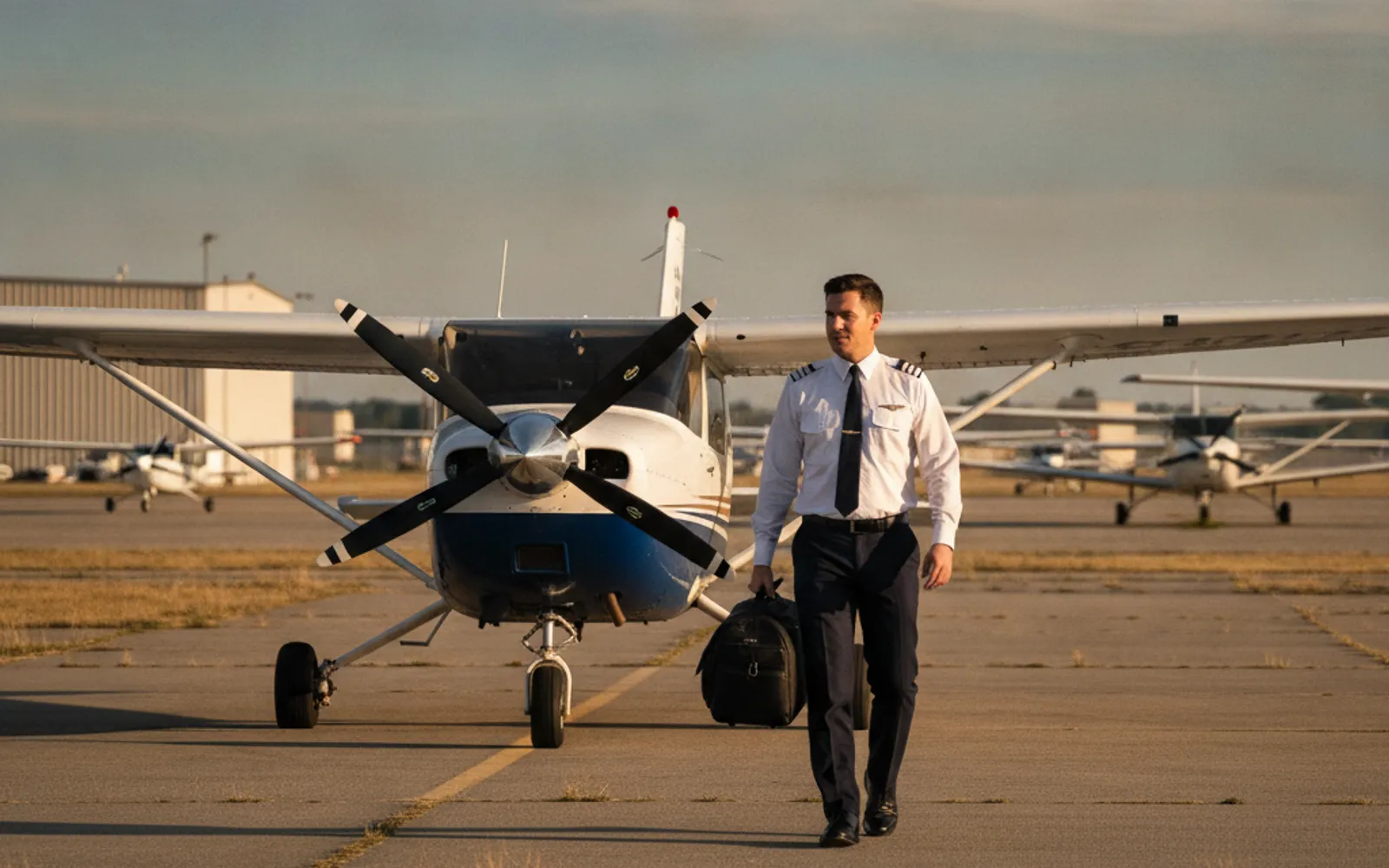
Alpha Aviation Group trains international students to build a professional pilot career starting in Miami, Florida. Hands-on flight training is delivered by Alpha Aviation Group under FAA Part 61 regulations at Fort Lauderdale Executive Airport (FXE), within the greater Miami metropolitan area, with bilingual support in English and Spanish. If you’re a foreign national planning to study flight in the United States, you’ll hear two acronyms alongside “visa”: SEVIS and TSA — two separate procedures, run by two separate agencies, both relevant before you can start flying.
Before going further, an important clarification: this content is informational and does not replace legal or immigration advice. Alpha Aviation Group is not a law firm or an immigration agency, does not provide legal advice, and cannot confirm your individual case. Visa, SEVIS, and TSA security program matters require specialized human review: for current flight-training security requirements, confirm directly with TSA’s own channels, and for your immigration situation, consult an immigration attorney or the relevant embassy/consulate.
What is TSA’s Flight Training Security Program?
It’s a security vetting requirement that the Transportation Security Administration (TSA) applies to flight students who are not U.S. citizens or permanent residents, before they can begin flight instruction on U.S. soil. The goal is to verify background information ahead of training, as a step that runs separately from — and in addition to — the visa and SEVIS process.
This requirement derives from 49 CFR Part 1552 (eCFR, consulted 2025-01-15), the federal regulation covering TSA’s flight training security program for non-U.S. citizens. However, confirming the exact current wording, who specifically falls within scope, the forms involved, processing timelines, and any fee amounts is something this article cannot do from a primary TSA source: that verification is pending specialized human review at the time of writing. Before starting any procedure, confirm those operational details directly through TSA’s official flight training security program channel, since that information changes and must be checked firsthand. That’s why this piece does not include TSA fee amounts or processing timelines.
What’s the first step to study flight in the United States as a foreigner?
The first step isn’t TSA — it’s getting accepted by a school certified under the Student and Exchange Visitor Program (SEVP). Only after that acceptance does the rest of the process kick in, including SEVIS registration and, later, the security review.
According to Study in the States, run by the Department of Homeland Security (DHS), the typical path is: apply to an SEVP-approved school, receive acceptance, get registered in the Student and Exchange Visitor Information System (SEVIS), and pay the SEVIS I-901 fee [1]. Flight training is generally classified as a vocational program, which corresponds to M-1 visa status rather than F-1, according to ICE/SEVP’s definition, unless the program is integrated into a university degree [2].
Once accepted and registered in SEVIS, the school issues Form I-20, the document a student uses to apply for a student visa (F or M) at a U.S. embassy or consulate [3]. Between acceptance and the actual start of flight instruction, TSA’s security review comes into play, running in parallel to — and in addition to — the immigration process. The exact point at which TSA vetting must be completed relative to each training milestone should be confirmed directly with TSA, since this article does not verify that sequencing beyond the general order described here.
What order do the visa, SEVIS, and TSA approval come in?
In general terms, the order is: acceptance at an SEVP school, SEVIS registration and payment of the I-901 fee, issuance of the I-20, the F or M visa application at the consulate, and TSA’s security vetting before actual flight training begins.
The U.S. Department of State notes that new student visas can be issued up to 365 days before the course start date, though entry into the United States isn’t permitted more than 30 days before that date [3]. The non-refundable visa application fee is $185, and an issuance fee may apply depending on nationality [3]. These are consular process costs, separate from any TSA program fee, which must be confirmed directly with TSA’s official channels before budgeting time or expenses.
To get a fuller picture of the whole program — licenses, ratings, and the bilingual support Alpha Aviation Group offers from Miami, Florida — it’s worth reviewing FAA Part 61 training in Miami for Latin American students, which describes how these procedures fit together with the training plan.
What happens if the study program ends or the student changes plans?
A student on an F visa must leave the United States within 60 days of the program completion date listed on Form I-20, including any authorized practical training period [3]. SEVIS is the system that tracks this information and, according to ICE, serves as DHS’s core technology for this security mission [2].
If a student changes schools, changes programs, or needs an extension, that means updating the SEVIS record and, potentially, reconfirming TSA authorization as applicable. Alpha Aviation Group can help you understand how flight training fits into the program calendar, but any decision about immigration status should be reviewed by an immigration attorney: Alpha does not provide legal advice, and these decisions require specialized human review on a case-by-case basis.
If you’re already looking into how these procedures connect to other aspects of international student status, these related articles from the same cluster dig deeper into connected topics: how a proposed DHS fee for F-1 OPT could relate to those studying flight on an M-1 visa in DHS Proposes a Fee for F-1 OPT, and the consular review of social media in F-1 Visa Social Media Screening in 2026.
Where do I confirm current requirements and costs before starting the process?
Before paying any fee or scheduling dates, confirm the information directly with primary sources. For TSA’s security program, the agency’s own flight training security program channel is the reference to check for forms, processing timelines, and current fees, since that information can change and is not confirmed in this article.
For the general immigration process, the official sources are Study in the States (DHS) [1], ICE’s SEVP/SEVIS page [2], and the Department of State’s student visa page [3]. For the regulatory basis of the security review itself, see 49 CFR Part 1552 on eCFR [4]. Alpha Aviation Group can help you understand how flight training fits with your academic calendar, but final confirmation of immigration and security requirements belongs to those agencies and, on legal matters, to a specialized attorney.
If you also want to understand the time and budget investment on the training side, check out FAA pilot training cost in Miami by level, which breaks down how each stage is organized, from the Private Pilot License (PPL) through later ratings.
If you’d like to talk through your specific case and understand how the paperwork timeline fits with starting your training in Miami, Florida, you can contact admissions or explore all programs available. Schedule a call with the Alpha Aviation team to work through the administrative path that makes sense for you — keeping in mind that legal and immigration matters should always be confirmed with a specialized professional and directly with TSA.
Editorial transparency note: Specific TSA figures (application fee amount, processing timeline, and the current status of its flight-training security rule) could not be confirmed against a primary TSA source at the time this article was written. For that reason, no TSA figures are included here. This content is flagged as pending specialized legal/immigration review before any update involving TSA-specific data.
[1] Study in the States (DHS): https://studyinthestates.dhs.gov/students [2] ICE — SEVP/SEVIS: https://www.ice.gov/sevis [3] U.S. Department of State — Student visa: https://travel.state.gov/content/travel/en/us-visas/study/student-visa.html [4] eCFR — 49 CFR Part 1552: https://www.ecfr.gov/current/title-49/part-1552
Frequently asked questions
What is TSA's Flight Training Security Program?
It’s a security vetting requirement from the Transportation Security Administration (TSA) for flight students who are not U.S. citizens or permanent residents. It verifies background information before authorizing flight training, separately from the visa and SEVIS registration. Current forms, timelines, and fees must be confirmed directly with TSA, since this article does not include unverified figures.
What's the first step to study flight in the U.S. as a foreigner?
You must first be accepted by a school certified under the Student and Exchange Visitor Program (SEVP). That triggers SEVIS registration, payment of the I-901 fee, and issuance of Form I-20, which you then use to apply for a student visa at the relevant consulate.
Does flight training use an F-1 or M-1 visa?
According to ICE/SEVP, flight training is generally classified as a vocational program, which corresponds to M-1 status rather than F-1, unless the program is integrated into a university degree. Confirm your specific case with the school and an immigration attorney.
Where does TSA's security process fit in the overall sequence?
It comes after SEVP school acceptance, SEVIS registration, and the visa application, and before actual flight training begins. It’s an additional step that runs alongside the immigration process, not a substitute for the visa or SEVIS.
Can Alpha Aviation answer immigration or TSA questions?
Alpha Aviation Group does not provide legal or immigration advice. It can help you understand how hands-on training in the Miami, Florida area fits your program calendar, but confirming TSA, SEVIS, and visa requirements is the responsibility of the official agencies and, for legal matters, a specialized attorney.