 Español
Career
What Is the ATP-CTP, and When Should a Pilot Complete It Before Flying for an Airline?
The ATP-CTP (Airline Transport Pilot Certification Training Program) is a course required by U.S. regulations before a pilot can sit for the written exam for the ATP certificate, the highest level of pilot certification. If your goal is to fly for a commercial airline in the United States, this course shows up at a specific point on the path, after the CPL (Commercial Pilot License) and before stepping into an airliner’s flight deck. Miami, Florida is a common starting point for students from Latin America who begin that journey with the PPL (Private Pilot License).
What exactly is the ATP-CTP?
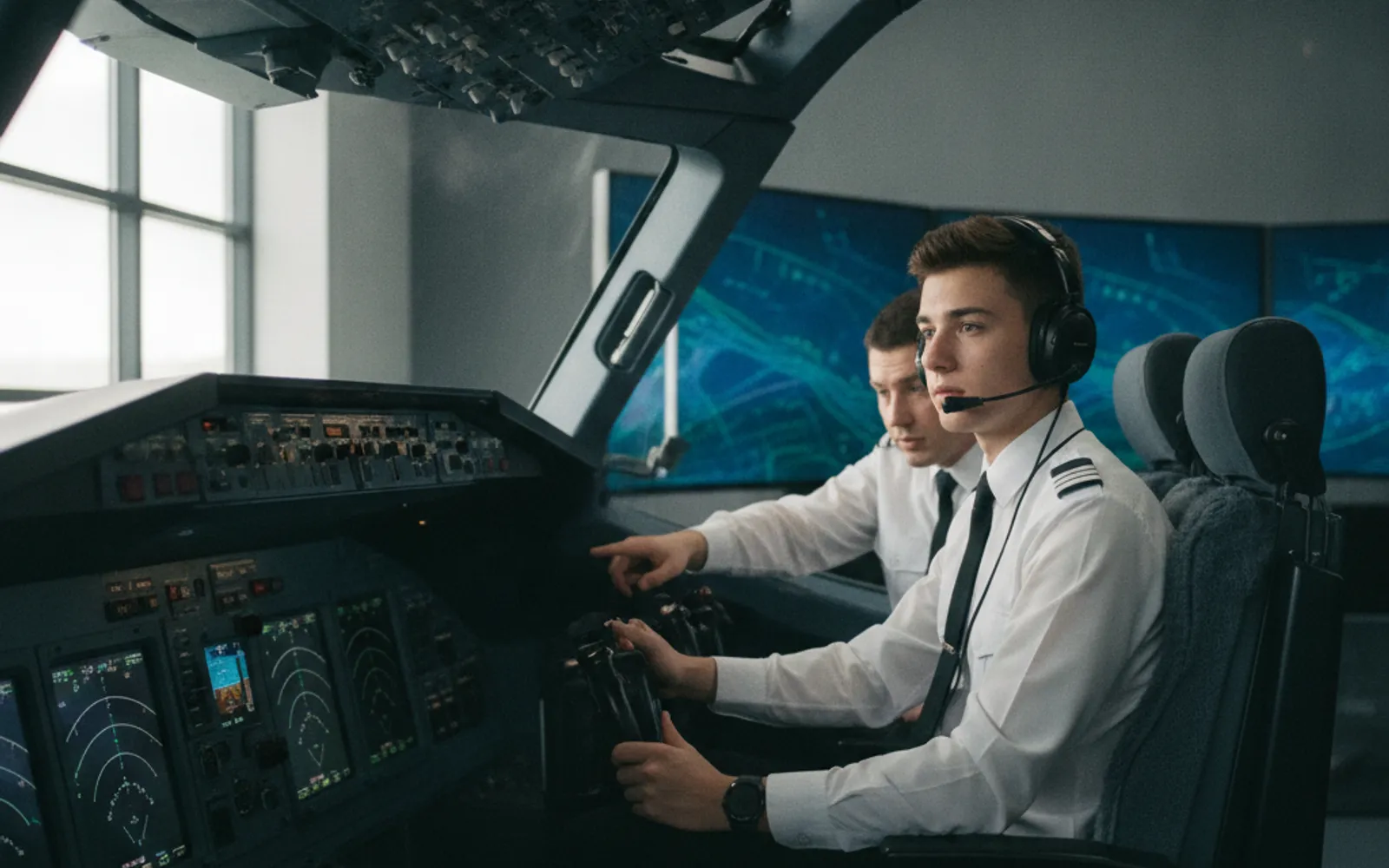
The ATP-CTP is a combined training program — academic coursework plus simulator time — that a pilot must complete before being eligible to take the knowledge exam for the ATP (Airline Transport Pilot) certificate. It is not a certificate itself, but a mandatory prerequisite for taking that exam.
The course was introduced to raise safety standards for commercial aviation in the United States, and it covers topics such as operations in adverse conditions, multi-crew coordination, jet aircraft aerodynamics, and procedures for uncommon situations. It is typically offered by certified training providers with access to advanced-level simulators, since part of the program includes required simulator hours in addition to classroom instruction. Pilot certification in the United States, including the ATP certificate, falls under 14 CFR Part 61, whose current text is available at eCFR, Part 61.
It’s worth not confusing the ATP-CTP with CPL exam prep or with multi-engine rating training. These are separate stages: first a pilot builds flight hours and certificates (PPL, instrument rating, CPL, multi-engine), and the ATP-CTP comes later, as a specific step toward the ATP certificate.
When should a pilot complete the ATP-CTP?
A pilot takes the ATP-CTP once they are close to meeting the experience requirements for the ATP exam, generally near the final stage of their path toward a commercial airline. It is not something done at the start of training, but rather a step that comes right before the ATP knowledge exam.
In practice, this usually happens after a pilot has logged most of their flight hours working as a flight instructor, in cargo operations, in air taxi work, or in other roles that build experience while a career takes shape. The ATP-CTP doesn’t replace those hours — it’s an additional requirement completed once a pilot is ready to move toward the ATP level. The general steps the FAA outlines for advancing between pilot certificates, up through the ATP level, are described on the official page FAA — Become a Pilot.
Alpha Aviation Group is based in the Miami, Florida area and guides students from the start of this path — Private Pilot License (PPL), instrument rating, Commercial Pilot License (CPL), and Multi-Engine Rating (MEL) — and advises them on the steps that follow, including when it makes sense to start looking into the ATP-CTP based on each student’s progress toward an airline career.
How does the ATP-CTP relate to the CPL?
The ATP-CTP doesn’t replace the CPL, and it isn’t taken instead of it — these are separate, sequential stages in a professional pilot’s career. The Commercial Pilot License lets a pilot start working in the industry; the ATP-CTP comes later, when a pilot is working toward the ATP level.
The Commercial Pilot License (CPL) has its own eligibility and minimum aeronautical experience requirements, set out in federal regulations. Under 14 CFR §61.123, general eligibility requirements apply to obtaining the CPL, and 14 CFR §61.129 details the minimum aeronautical experience required. These are the first formal steps toward a career as a professional pilot, and this is the stage where Alpha Aviation Group focuses its hands-on FAA Part 61 training program, at Fort Lauderdale Executive Airport (FXE).
The ATP-CTP, by contrast, belongs to a later stage: once a pilot already holds a CPL and has accumulated enough experience, and is preparing for the ATP knowledge exam as part of the path toward an airline. The current regulatory detail on pilot certification, including the requirements that precede the ATP, is available in the full text of Part 61 on the eCFR.
Who can guide a student toward the ATP-CTP path?
A student who is just starting out doesn’t need to figure out the ATP-CTP right away — that step comes later, after building a solid foundation of certificates and flight hours. What matters from the beginning is working within a clear program structure with proper guidance.
At Alpha Aviation Group, based in the Miami, Florida area, the training plan can include PPL, CPL, instrument rating, multi-engine rating, and flight instructor certification, with bilingual support in English and Spanish for international students, with emphasis on Latin America. Hands-on flight training takes place at Fort Lauderdale Executive Airport (FXE), within the Miami metropolitan area, with a satellite base at North Perry Airport (KHWO). The general steps and requirements the FAA sets for advancing between certificates, up to the ATP level, are described at FAA — Become a Pilot.
Later in a pilot’s career, once they’re approaching the experience requirements for the ATP level, Alpha Aviation can present qualified candidates and support their path toward airline hiring processes, without this guaranteeing employment. The student agreement guarantees five interviews with U.S. commercial airlines upon successful completion of the Airline Career Pathway, subject to its terms.
If you’re trying to figure out where to start, or want to understand how the CPL, ratings, and later steps like the ATP-CTP fit into a complete path, you can review the FAA pilot training cost in Miami by level or read more about FAA Part 61 training in Miami for Latin American students.
Where should I start if I eventually want to reach the ATP-CTP?
The real starting point isn’t the ATP-CTP — it’s the Private Pilot License (PPL), followed by the instrument rating and the Commercial Pilot License. These are the foundation on which all the experience needed to move toward the ATP level is later built.
To see that full path from the beginning, you can read about how to become a commercial pilot from Colombia and Ecuador and why train in the U.S., or about how to start your commercial pilot career in the United States with Alpha Aviation Group. If you’re also weighing how to handle studying far from home, this piece on overcoming loneliness while training to become a commercial pilot in the United States can help you prepare for that stage.
To explore the full program structure, you can visit the all programs page, or start with the Rookie — Level I: FAA training from zero program if you’re beginning without any prior flight experience.
If you’re ready to take the first formal step toward that career, you can contact admissions and talk through how Alpha Aviation Group structures its training plan, from the PPL through the ratings that build your experience as a professional pilot.
Frequently asked questions
What is the ATP-CTP?
It’s a mandatory training program, combining classroom instruction and simulator hours, that a pilot must complete before taking the knowledge exam for the ATP (Airline Transport Pilot) certificate. It isn’t a certificate itself, but a prerequisite required by U.S. regulations before that exam.
Does the ATP-CTP replace the CPL?
No. The CPL and the ATP-CTP are separate, sequential stages. The CPL, with its own requirements under 14 CFR §61.123 and §61.129, allows a pilot to start working commercially. The ATP-CTP comes later, once a pilot already holds a CPL and is working toward the ATP level.
When should a pilot complete the ATP-CTP?
It’s completed near the final stage of the path toward a commercial airline, once a pilot is close to meeting the experience requirements for the ATP exam. It is not part of initial training alongside the PPL, instrument rating, or CPL, but a later step in the career.
Where does Alpha Aviation Group provide hands-on training?
Hands-on flight training takes place at Fort Lauderdale Executive Airport (FXE), within the Miami, Florida metropolitan area, with a satellite base at North Perry Airport (KHWO). Support is bilingual, in English and Spanish, designed for international students with an emphasis on Latin America.
Does Alpha Aviation Group guarantee a job with an airline after the ATP-CTP?
No. Alpha Aviation can present qualified candidates and support their path toward airline hiring processes, but this does not guarantee employment. The student agreement guarantees five interviews with U.S. commercial airlines upon successful completion of the Airline Career Pathway, subject to its terms.