 Español
 Training
How to Become a Commercial Pilot
Becoming a commercial pilot is a clear path: licenses, flight hours, and a medical certificate. This guide covers the requirements, the training process, and how pilots usually get their first job. Alpha Aviation Group trains international students for FAA licenses in Fort Lauderdale, Florida.
What do you need to be a commercial pilot?

Before you start flight training, most authorities ask for:
- Minimum age: usually 18 to begin private training and 21 for a Commercial Pilot License (CPL).
- Education: a high-school diploma is recommended. English is the working language of aviation.
- Class 1 aviation medical certificate.
- A Private Pilot License (PPL) first, then more hours toward the CPL.
Look for a school certified by the authority you will fly under (FAA in the United States, EASA in Europe, or your national DGAC).
How long does training take, and what does it cost?

A typical path looks like this:
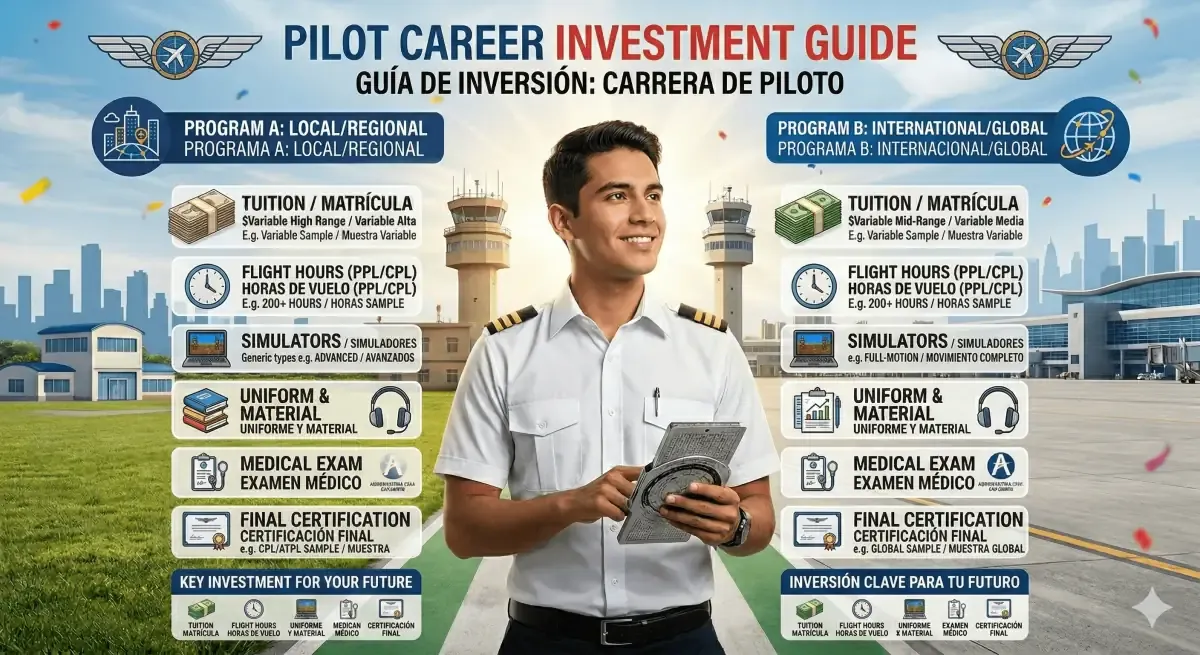
- Ground school: aerodynamics, weather, navigation, and regulations. Intensive programs often take 6 to 12 months.
- Flight time: about 200 to 250 hours for a CPL, including night and instrument work. Exact hours depend on the country and the license.
- Licenses: PPL, then CPL. An ATPL (or ATP in the U.S.) is the later step for airline transport.
- Cost: often between $40,000 and $100,000 USD, depending on the school, aircraft, and whether housing is included. Treat that as a range, not a quote.
At Alpha Aviation in Fort Lauderdale, the Airline Career Pathway covers PPL through instructor ratings under FAA Part 61.
What jobs can you get after a CPL?

After the CPL, most pilots build hours before a major airline:
- Regional airline first officer
- Charter or corporate flying
- Certified Flight Instructor (CFI), a common way to reach the 1,500 hours many U.S. airlines want
- Cargo or specialized work (survey, air ambulance)
Keep certificates current and keep training. Demand stays high as traffic grows and senior pilots retire.