 Español
 Training
"Guardians of the Sky": How Does an Air Traffic Controller Think?
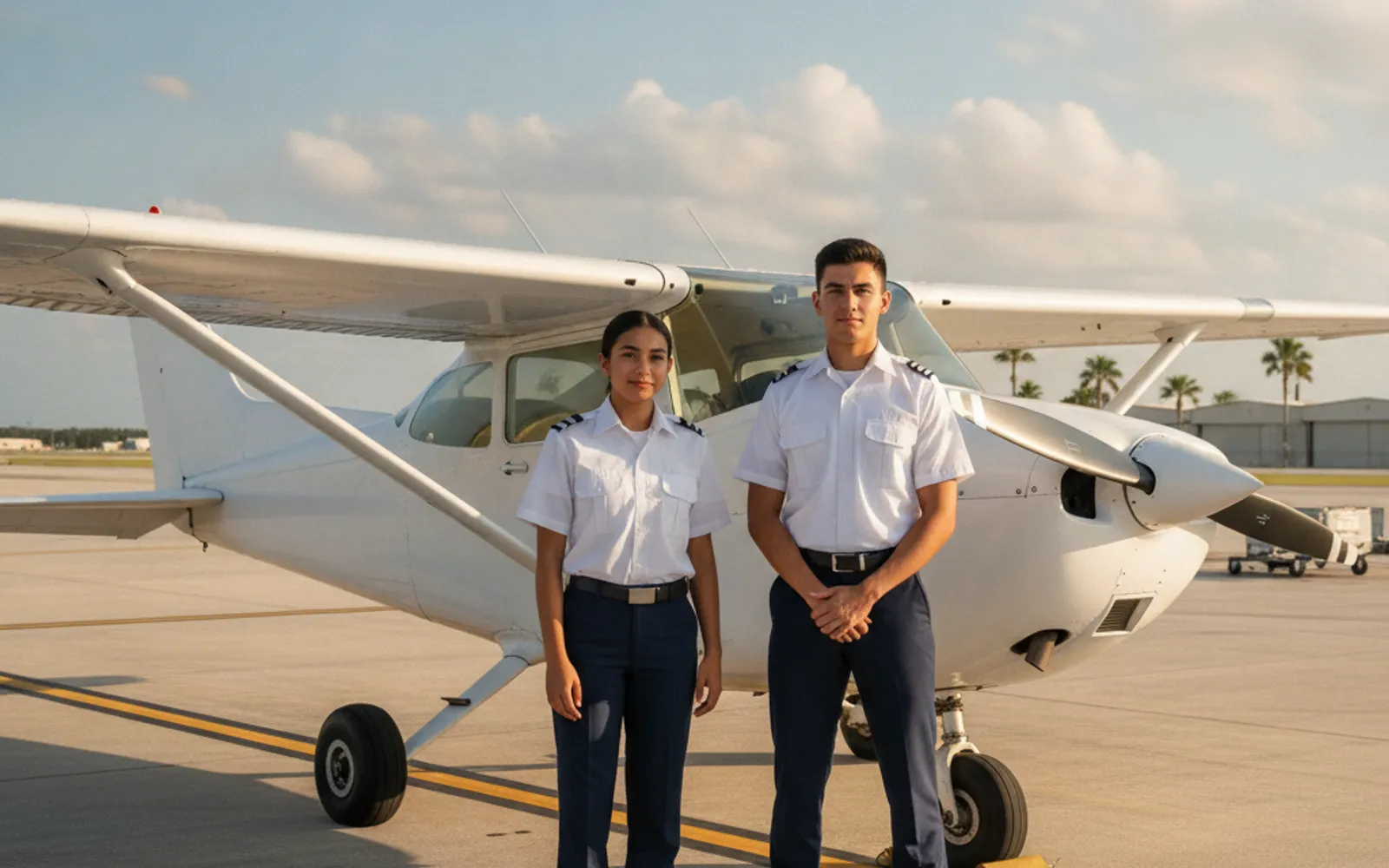
While the pilot is the captain of the aircraft, there is a team of unsung heroes on the ground who are the captains of the sky: Air Traffic Controllers (ATC).
To passengers, they are just a calm voice sometimes heard over the intercom. But in reality, they are managing an immense and complex game of three-dimensional chess, where the pieces move at 500 miles per hour.
But how does a controller think? What do they see on their screens, and how do they make split-second decisions?
It’s Not a Plane, It’s a Vector
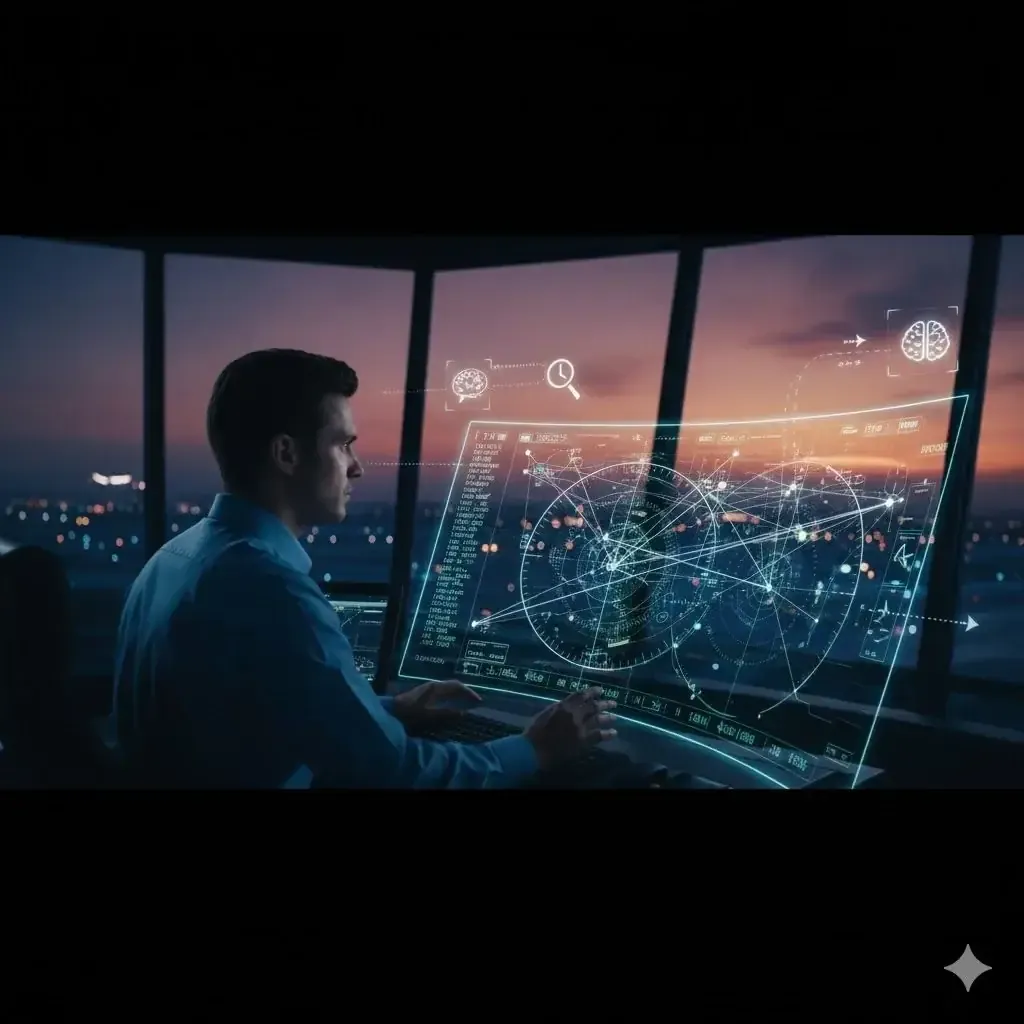
The first thing to understand is abstraction. A controller doesn’t see an “American Airlines plane.” They see a set of data: a callsign (AA123), an altitude (35,000 feet), a speed (450 knots), and a heading (vector).
Their brain is constantly processing these vectors, projecting them into the future. They aren’t just managing where the planes are now, but where they will be in 5, 10, and 15 minutes.
The Mantra: “Separation, Separation, Separation”
The primary job of an ATC is to maintain separation. Everything else is secondary. They must ensure that every aircraft has its own bubble of protected space.
- Vertical Separation: Generally 1,000 feet (about 300 meters) above or below another aircraft.
- Horizontal Separation: This varies, but en route, it is typically 3 to 5 nautical miles (about 3.5 to 5.7 miles).
A controller’s brain is trained to spot “conflicts” (points where two bubbles might touch) minutes before they happen, and to issue clear instructions to prevent it.
The Language of the Sky: Aviation Phraseology
A controller cannot hesitate. Communication must be 100% clear, concise, and unambiguous. There is no room for “I think you should…” or “maybe…”.
They use an international language called “phraseology.”
- Clear Instructions: “Turn right heading two-three-zero” or “Descend and maintain flight level two-zero-zero.”
- Phonetic Alphabet: They use “Alpha, Bravo, Charlie” to avoid confusion between “B,” “D,” or “P.”
- Specific Numbers: They say “Niner” (instead of nine) and “Tree” (instead of three) because they are easier to distinguish over the radio.
The Three Dimensions of Control
A controller’s job is divided into three main roles, each with a different mindset:
- Tower Controller: Thinks in the immediate. Manages the runways, takeoffs, and landings. It is visual and tactical.
- Approach Controller (TRACON): Thinks in sequences. Arranges the “line” of arriving aircraft, guiding them from cruising altitude down to alignment with the runway.
- Center Controller (En Route): Thinks long-term. Manages huge sectors of airspace, guiding planes during the cruise phase of their flight.
It is one of the most stressful jobs in the world, requiring elite spatial awareness, absolute calm under pressure, and the ability to make critical decisions in a split second. They are the true guardians of the sky.