 Español
 Training
Turbulence: Dangerous Myth or Simple Inconvenience?
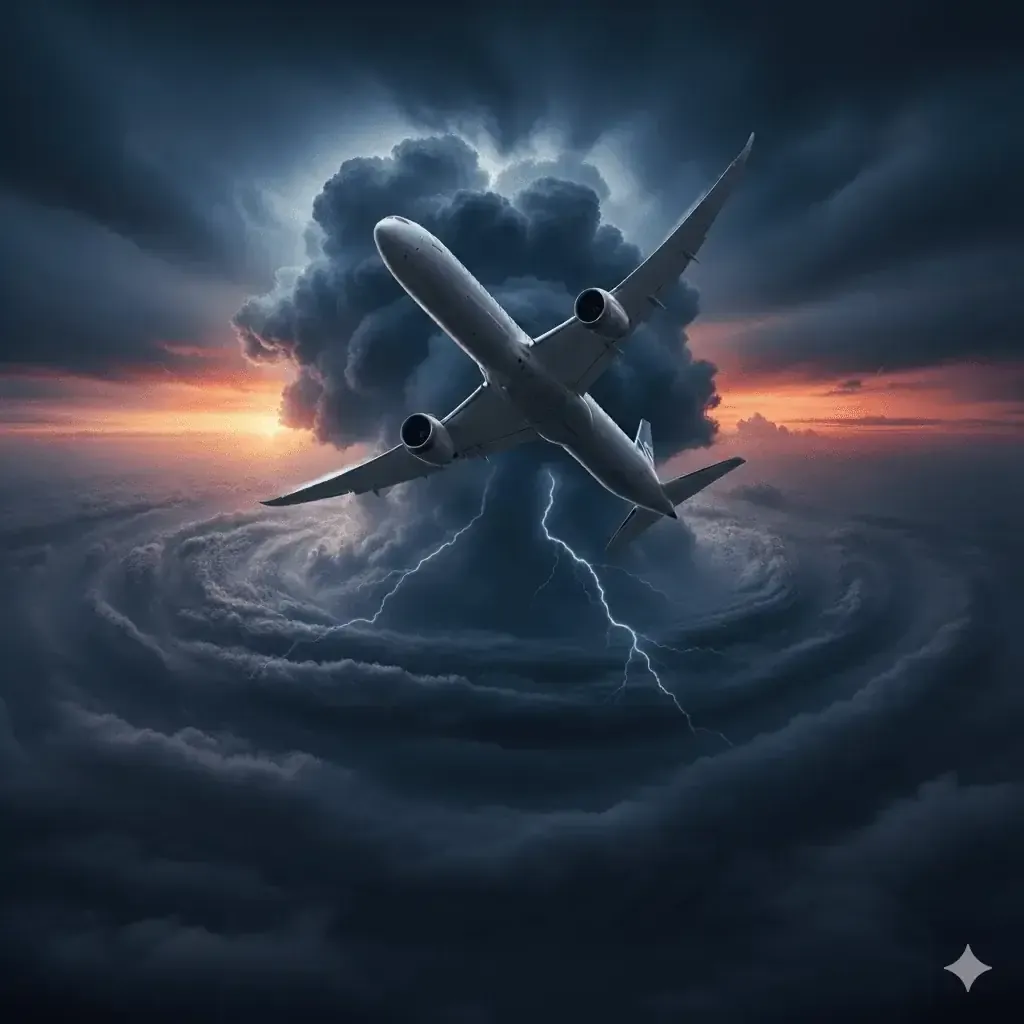
For most nervous passengers, it’s the word no one wants to hear: “Please fasten your seatbelts; we may experience some turbulence.” Stomachs drop, and hands grip the armrests.
Turbulence is, without a doubt, the number one cause of anxiety when flying. But is that fear justified? Can turbulence take down an airplane? The short answer is no. It’s time to separate myth from reality.
Why aren’t pilots afraid of turbulence?
While passengers worry, pilots see turbulence as a normal event. For them, it’s not a safety issue, but a comfort issue. Think of it like potholes on a road or waves in the ocean. It’s uncomfortable, but the car (or boat) is designed to handle it.
- Aircraft Design: The wings of a commercial airplane are designed to be incredibly strong and, at the same time, flexible. They can withstand forces far greater than any turbulence.
- Training: Pilots spend hundreds of hours in simulators practicing how to handle severe turbulence. Their procedure is simple: slow the plane down and “ride” the waves.
- The Real Danger: The only real danger from turbulence is not to the plane, but to the people inside it who are not wearing their seatbelts.
What exactly causes those “bumps”?
Turbulence is nothing more than unstable, moving air. There are several types:
- Thermal Turbulence: Caused by rising hot air, common over deserts or on sunny days.
- Mechanical Turbulence: Air hitting obstacles like mountains, hills, or even tall buildings near an airport.
- Clear Air Turbulence (CAT): This is the most notorious one. It’s invisible, occurs at high altitude, and is caused by colliding air masses moving at different speeds (Jet Streams).
- Wake Turbulence: The air left behind by another aircraft as it passes. This is why air traffic controllers maintain strict separation.
Is climate change making turbulence worse?
This is where recent news gets interesting: yes. Multiple scientific studies have confirmed that global warming is altering the Jet Streams.
Warmer air is injecting more energy into the atmosphere, making these currents more unstable. The result is a significant increase in the frequency and intensity of Clear Air Turbulence (CAT)—the kind that cannot be seen on radar.
What can you do as a passenger?
Knowing the plane isn’t going to crash is a great relief, but the discomfort is still real.
- The Golden Rule: Keep your seatbelt fastened whenever you are seated. Most injuries occur during unexpected turbulence.
- Choose Your Seat: Seats over the wings tend to feel less motion, as they are closer to the plane’s center of gravity. The tail moves the most.
- Hydrate and Relax: Breathe. Remember that this is a normal phenomenon and the crew is trained for it.
In the end, turbulence is just that: a simple inconvenience. It’s a normal part of traveling through an invisible ocean of air that is never perfectly still.